
XVIII Congreso SAAS “Negotiating Identity and Power: Resistance, Rebellion, and Resilience in U.S. Literature and Culture”
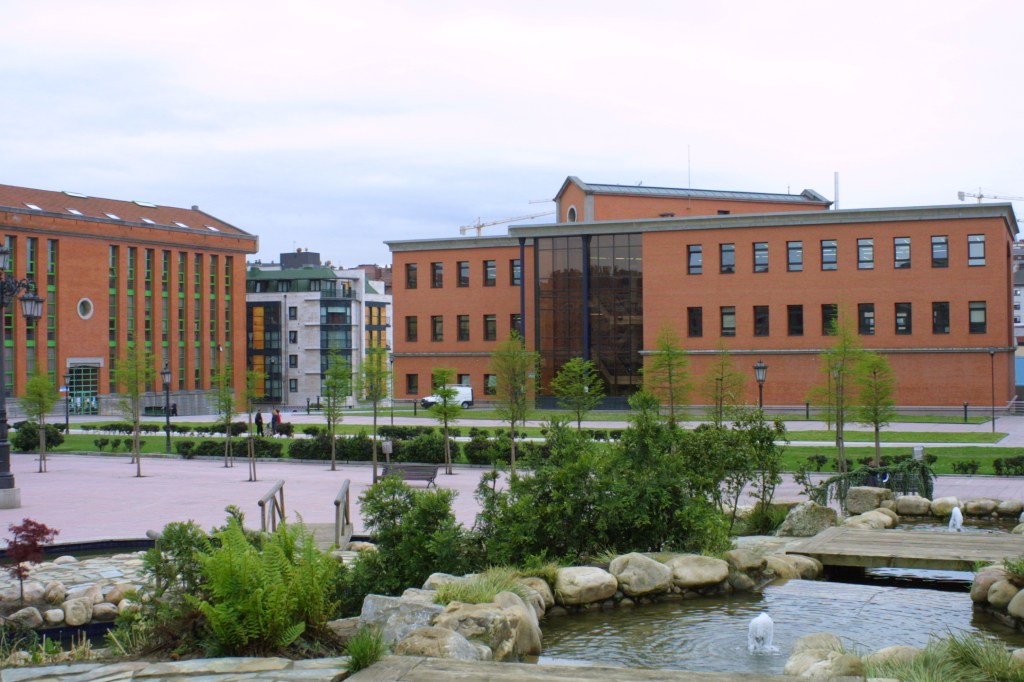
Universidad de Oviedo, 15 · 16 · 17 Marzo 2027
Call for Panels NOW OPEN
In the midst of dark and uncertain times in the United States marked by escalating political polarization, racialized violence, assaults on reproductive rights, systemic inequalities, climate denialism, and threats to democratic institutions the need to interrogate how identity and power are constructed, contested, and renegotiated in literary and cultural texts/discourses has become especially pressing. As bell hooks reminds us, “the function of art is to do more than tell it like it isit’s to imagine what is possible” (Outlaw Culture, 1994). More recently, Isabel Wilkerson’s Caste: The Origins of Our Discontents (2020) reframes U.S. racial injustice through the lens of caste, exposing the durability of entrenched hierarchies and the cultural work required to imagine alternatives. The intensification of social and political unrest has laid bare both the persistence of structural inequities and the ongoing efforts of individuals and communities to resist them. Within this context, U.S. literature, film, popular culture, and related cultural productions continue to serve as crucial arenas for articulating dissent and envisioning futures. Stuart Hall’s insight that culture is a site where “power is both exercised and contested, where it is both visible and invisible” (“Cultural Studies: Two Paradigms,” 1980) remains instructive. These cultural sites not only expose the mechanisms by which power is enacted and enforced, but also generate narratives of survival and resistance, articulate strategies of rebellion, and imagine modes of resilience that sustain marginalized and disenfranchised communities. Saidiya Hartman’s concept of “critical fabulation” (Lose Your Mother, 2007) and José Esteban Muñoz’s notion of “utopian performativity” (Cruising Utopia, 2009) continue to resonate as vital theoretical tools for reimagining history and futurity; together they demonstrate how aesthetic practices not only challenge the silences and erasures imposed by dominant narratives but also open up spaces for speculative worldmaking, coalitionary imaginaries, and modes of cultural resistance that remain urgently relevant in the twenty-first century. Examining these intersections of identity, power, and cultural production allows us to understand more fully the ways in which texts respond to and shape broader sociopolitical conditions. Just as importantly, such examinations illuminate the continuities between past and present struggles, demonstrating how histories of colonization, slavery, exclusion, and protest resonate within contemporary movements for justice and liberation. Toni Morrison’s reminder in Beloved (1987) that “the past is never simply the past” continues to reverberate in recent analyses, such as Mandviwala, Hall, and Spencer’s “The Invisibility of Power” (2022), where they expose how structural trauma manifests in contemporary institutional and psychological forms, highlighting the harmful psychological effects the ‘invisible power’ that racially and gendered privileged people continue to hold in the contemporary United States has on those it oppresses as well as on those who wield it.
This conference invites papers that critically explore how U.S. writers, artists, performers, and cultural producers negotiate the intersections of identity and power. We welcome contributions that analyze the cultural and political work of U.S. texts in revealing structures of domination while simultaneously foregrounding acts of resistance, strategies of rebellion, and narratives of resilience across diverse communities, genres, and media. In the spirit of Audre Lorde’s conviction that “the master’s tools will never dismantle the master’s house” (Sister Outsider, 1984), we particularly encourage contributions that foreground creative, insurgent, and coalitionary practices that expand the horizons of what is possible in the face of systemic oppression. Possible topics include, but are not limited to:
- Representations of protest, rebellion, and dissent in U.S. history, literature, and culture
- Resistance to systemic racism, gender-based discrimination, ableism, homophobia, and transphobia in cultural texts
- Narratives of resilience in marginalized or silenced communities
- The role of literature and culture in shaping political resistance and collective action
- Rebellious aesthetics: experimental forms and subversive genres as acts of defiance
- Indigenous and decolonial strategies of cultural resistance
- Power, surveillance, and the politics of identity in contemporary U.S. culture
- Cultural and literary responses to the erosion of democratic values and civil rights Narratives of violence (State-sanctioned, physical, psychological, sexual, economic, cultural, etc.) that expose domination, register trauma, and illuminate resistance
- Rewriting/reclaiming the archive: counter-histories and counter-memories
- Popular culture as a site of rebellion and resistance
- Revolutionary or insurgent violence as a means of reclaiming power
- Narratives of vulnerability, resilience, and agency
- Climate change, environmental justice and (grassroots) movements in U.S. literary and cultural production
- Narratives of migration, displacement, and border resistance
- Co-Futurisms speculative fiction, and imagining liberated futures
We welcome proposals from a variety of disciplines, including literary and cultural studies, history, gender studies, ethnic studies, media and performance studies, political science, and related fields. The conference languages will be English and Spanish. Panel proposal submissions will be processed through the form below, which is valid both for single chair panels and co-chaired panels (only one form per panel). At a later stage we will be opening a call for talkshops, full panels, and papers.
Calendar / Important Dates:
- Submission period for Panel proposals. Opens February 2, 2026 – Closes April 1, 2026. NOW OPEN
- Submission period for Panel proposals closes April 1, 2026
- Notification of approval/rejection: May 15, 2026
- Submission period for talkshops, round tables, full panels, and papers opens June 1, 2026
- Submission period for talkshops, round tables, full panels, and papers closes October 15, 2026
 Spanish Association for American Studies